Charting Adaptive AI Behaviors Refining Enemy Tactics Within Strategy Simulation Setups
Written by Blake Bauer · Sep 11, 2026
Charting Adaptive AI Behaviors Refining Enemy Tactics Within Strategy Simulation Setups
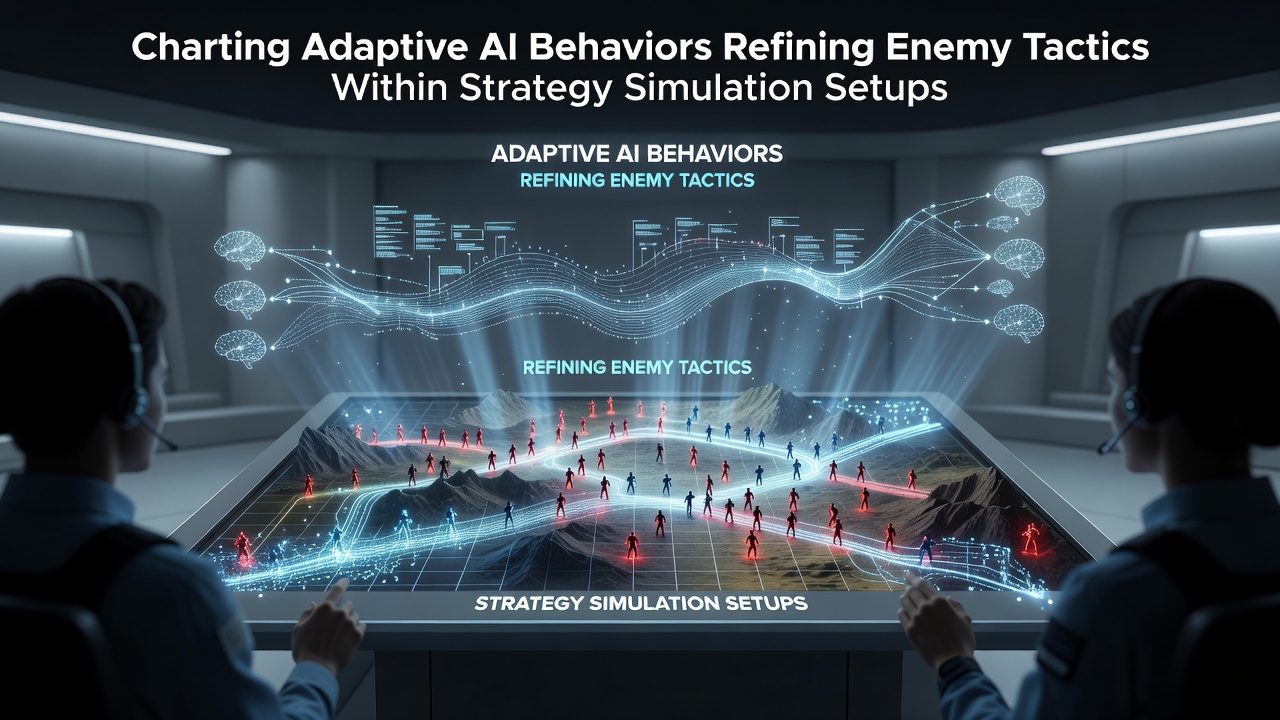
Strategy simulation setups have long relied on scripted opponent responses yet recent advancements in machine learning now allow systems to adjust behaviors dynamically based on repeated player interactions, and this shift creates more varied tactical challenges across multiple sessions. Researchers track these changes through metrics such as decision tree branching rates and reinforcement learning reward signals, which reveal how enemy units learn to counter specific formations or resource management patterns over time.
Core Mechanisms Driving Adaptation
Adaptive algorithms process player input logs in real time, then update internal models that govern unit positioning, resource allocation and attack sequencing, while traditional rule-based systems remain static after initial coding. Data from multiple simulation runs shows that neural network layers can reweight priorities when certain player strategies succeed consistently, leading to enemy forces that deploy flanking maneuvers or feints not present in early encounters. Observers note that integration of Monte Carlo tree search methods further refines these adjustments by evaluating thousands of potential move sequences before committing to a response, and this process occurs without manual intervention from developers.
Implementation in Contemporary Platforms
Developers embed these capabilities into military training simulators and commercial titles alike, where enemy commanders evolve counter-strategies as human participants repeat scenarios, and case studies from September 2026 deployments indicate that such systems reduced predictable patterns by measurable margins in controlled tests. One study revealed that reinforcement learning agents in large-scale map environments began prioritizing defensive structures after initial losses, whereas earlier versions focused solely on direct assaults. Those who have examined the underlying codebases find that modular behavior trees allow quick swaps between exploration and exploitation modes, enabling smooth transitions when new player tactics emerge mid-campaign.
Performance Metrics and Evaluation Frameworks
Benchmarking suites now include adaptability scores that measure how quickly opponent difficulty scales with player skill, and figures from academic repositories demonstrate correlations between training epochs and tactical complexity. Researchers discovered that combining supervised learning on historical match data with unsupervised clustering of player styles produces enemies capable of recognizing and disrupting common opening moves. External validation comes from reports issued by the European Space Agency on simulation accuracy, which highlight parallels between adaptive gaming models and real-world scenario planning tools used in aerospace contexts.
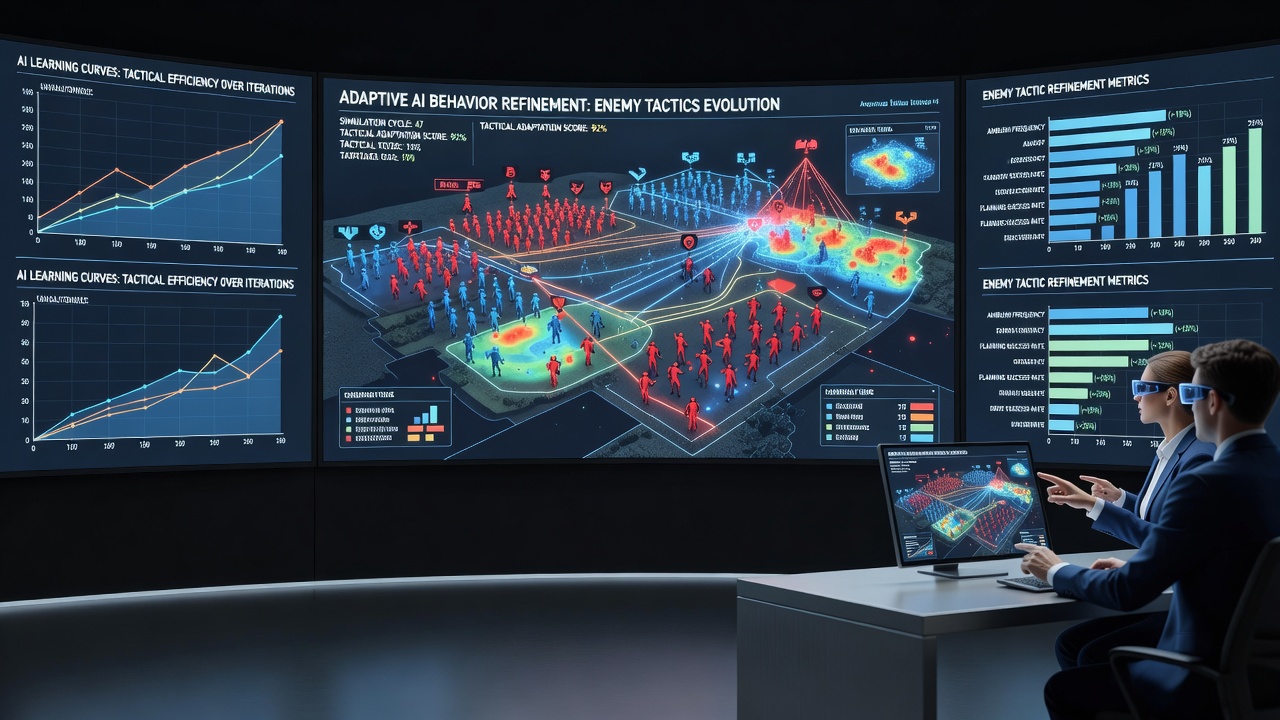
Additional layers incorporate player emotion proxies derived from input speed and pause frequency, allowing the system to escalate pressure when hesitation patterns appear, yet these features remain optional toggles in most commercial releases. Data indicates that latency between behavior updates stays under 50 milliseconds in optimized builds, preserving immersion even during large-scale battles involving hundreds of units.
Challenges in Scaling and Stability
Maintaining balance while permitting adaptation requires careful calibration of exploration rates, since excessive deviation can produce opponents that either collapse too quickly or become insurmountable, and developers address this through periodic human oversight sessions that reset outlier models. Those who've studied deployment logs report that edge cases arise when players employ unconventional approaches not represented in training datasets, prompting the need for broader sampling methods. Industry organizations such as the Association for Computing Machinery's SIGGRAPH have documented techniques that constrain adaptation within designer-defined bounds, ensuring narrative consistency alongside mechanical challenge.
Future Directions in Research and Application
Ongoing work explores multi-agent reinforcement learning where enemy factions coordinate across separate simulation instances, creating persistent memory effects that carry over between matches. Evidence suggests these approaches could extend to hybrid environments mixing human and AI participants, with each side influencing the other's learning curves. Observers note continued refinement in visualization tools that map decision pathways, helping analysts trace why specific tactical shifts occur after particular player actions.
Conclusion
Adaptive AI frameworks continue to reshape how strategy simulations present opposition, turning static encounters into evolving contests that respond to individual playstyles, and the integration of established machine learning methods with domain-specific constraints supports both training utility and entertainment value. As evaluation standards mature, developers gain clearer pathways for deploying these systems across varied hardware configurations while preserving competitive fairness.