Ceramic Substrate Innovations Stabilizing High-Frequency Signals During Intense Multiplayer Sessions on Compact Motherboards
Written by Rosa Jenkins · Sep 25, 2026
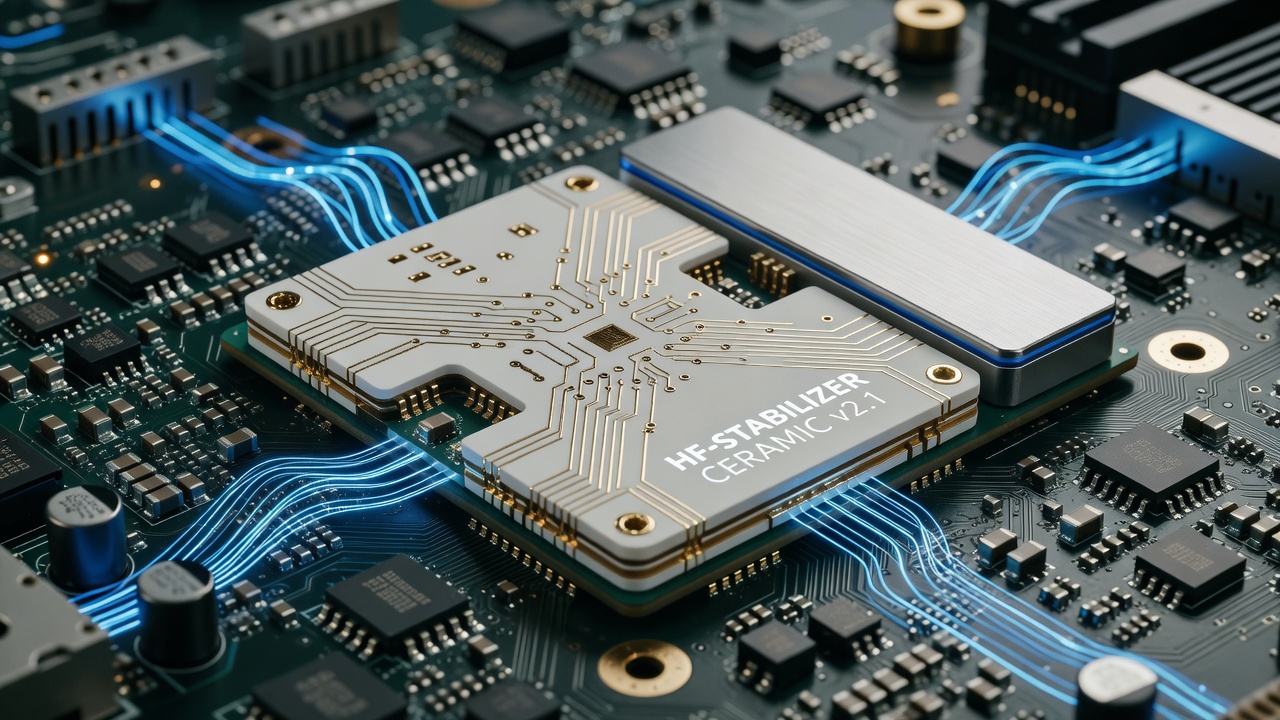
Ceramic Substrate Innovations Stabilizing High-Frequency Signals During Intense Multiplayer Sessions on Compact Motherboards
Compact motherboards designed for high-performance gaming systems rely on advanced materials to manage signal integrity when data rates climb during multiplayer sessions, and ceramic substrates have emerged as a key component in addressing interference and latency issues that arise in dense circuit layouts. These substrates, often composed of alumina or low-temperature co-fired ceramic compounds, provide dielectric constants that reduce crosstalk while supporting the thermal demands of tightly packed components.
Material Properties Driving Signal Performance
Ceramic substrates exhibit low dielectric loss factors which help preserve waveform fidelity across frequencies exceeding 10 GHz, a range common in modern network interfaces used for online competition, whereas traditional FR-4 laminates tend to introduce phase distortion under similar loads. Researchers at institutions across North America and Europe have documented how the thermal conductivity of these ceramics exceeds 20 W/mK in optimized formulations, allowing heat dissipation from processors and memory modules without requiring additional bulky heatsinks that would compromise the small form factor.
Integration Challenges in Small Form Factor Designs
Engineers face space limitations when routing high-speed traces for PCIe lanes and memory channels on boards measuring under 200 square centimeters, yet ceramic layers permit finer via structures and embedded passive components that maintain impedance matching throughout extended gameplay. Data from ongoing evaluations at facilities including those affiliated with the National Research Council Canada shows consistent reductions in bit error rates when ceramic interposers replace organic alternatives in test configurations simulating packet-heavy multiplayer environments.
Manufacturing processes for these substrates involve sequential lamination and sintering steps that align conductive traces with minimal warpage, ensuring reliable performance across temperature fluctuations encountered during prolonged sessions. Observers note that the coefficient of thermal expansion in matched ceramic formulations stays close to that of silicon dies, which minimizes mechanical stress at interconnect points and supports sustained operation without signal degradation.
Applications in Multiplayer and Esports Hardware
High-frequency signal paths benefit directly from the electromagnetic shielding characteristics of ceramic enclosures around sensitive RF sections, while compact motherboards equipped with these materials demonstrate improved jitter performance in Ethernet and Wi-Fi controllers during peak traffic. Studies conducted by teams at the Commonwealth Scientific and Industrial Research Organisation in Australia have quantified how substrate modifications correlate with lower packet loss figures in simulated tournament conditions, where hundreds of simultaneous connections stress the hardware.

System builders incorporate these substrates into ITX and mini-ITX platforms targeted at esports training rigs, where the combination of reduced electromagnetic interference and enhanced power delivery supports stable frame delivery even when multiple peripherals operate concurrently. In September 2026, several hardware vendors began shipping boards featuring next-generation ceramic composites that integrate microfluidic cooling channels, further extending the viability of small chassis for professional use.
Performance Metrics and Validation Data
Independent testing protocols reveal that ceramic-based designs maintain eye diagram openings at data rates up to 56 Gbps with margins exceeding industry thresholds, whereas equivalent organic boards show compression under identical thermal and electrical stress. Figures released through collaborative projects involving European research consortia indicate average improvements in signal-to-noise ratios of 3 to 5 dB when ceramic substrates are employed in the critical high-speed layers.
Component synergy extends beyond the substrate itself because compatible capacitor and inductor materials co-fired within the ceramic stack reduce parasitic inductance, which in turn supports cleaner power delivery to voltage regulators feeding the CPU and GPU. This integration proves especially relevant for compact builds where trace lengths are already minimized yet external interference sources remain prevalent in shared gaming environments.
Future Developments adn Industry Adoption
Continued refinement of ceramic formulations focuses on increasing bandwidth density while preserving mechanical robustness, with pilot production lines exploring glass-ceramic hybrids that offer even lower loss tangents for emerging 6G wireless interfaces in gaming peripherals. Adoption rates have risen as assembly yields improve through refined via-filling techniques, making the technology accessible beyond flagship models.
Those monitoring supply chain trends report that ceramic substrate suppliers have expanded capacity in response to demand from motherboard manufacturers seeking differentiation in the compact segment. Validation programs at academic and industrial labs continue to benchmark these innovations against evolving standards for signal integrity in dense computing platforms.
Conclusion
Ceramic substrate technology addresses core electrical and thermal constraints in compact motherboards by delivering stable high-frequency pathways suited to demanding multiplayer scenarios. Ongoing material advancements and integration strategies ensure these components remain central to hardware evolution in space-constrained gaming systems through 2026 and beyond.